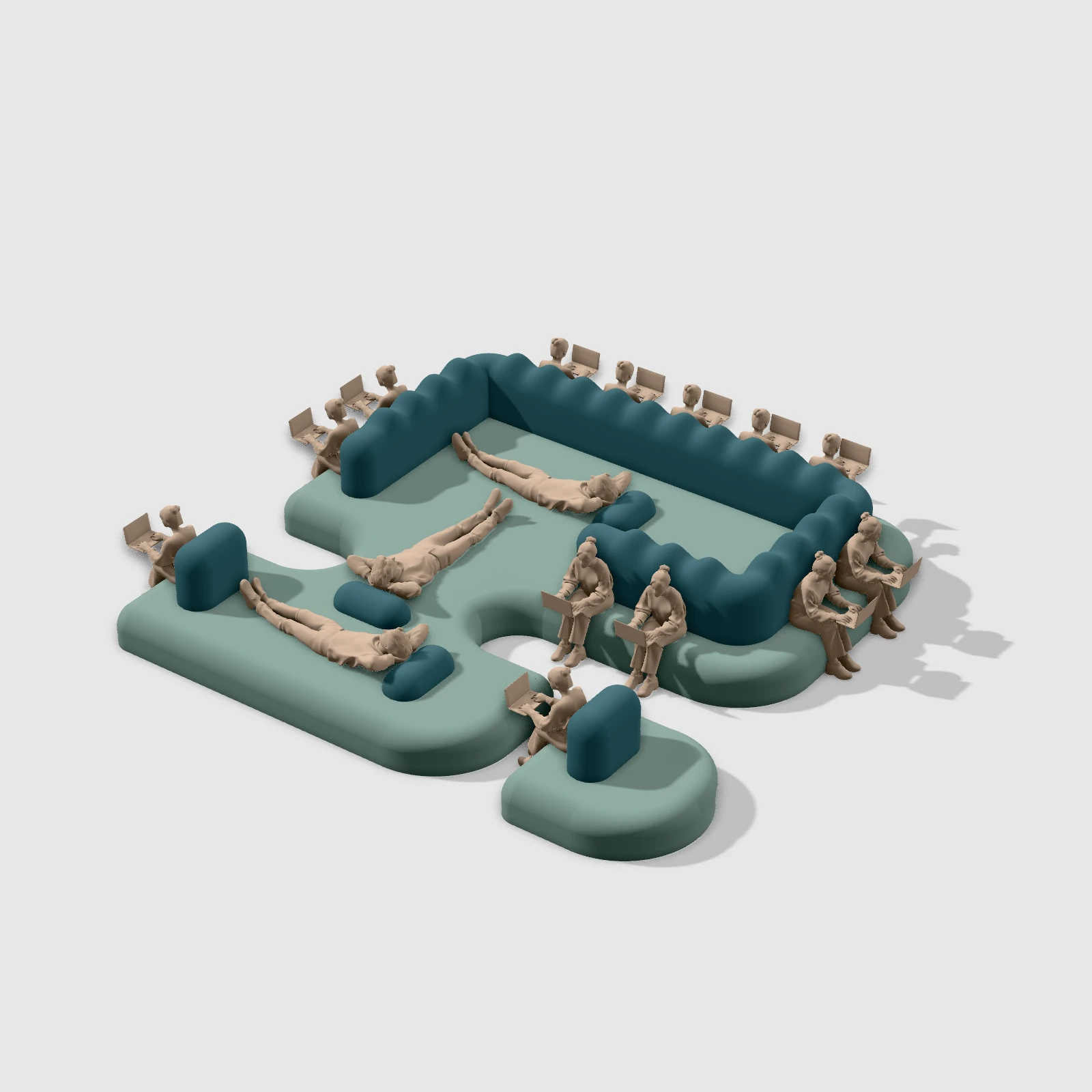
Sitting Islands
Modular seating developed with Monoceros and custom scripts.
Ján Pernecký & Hugo Fekar
Monoceros design study · 2026
Terrace layouts generated from seven movable shapes.
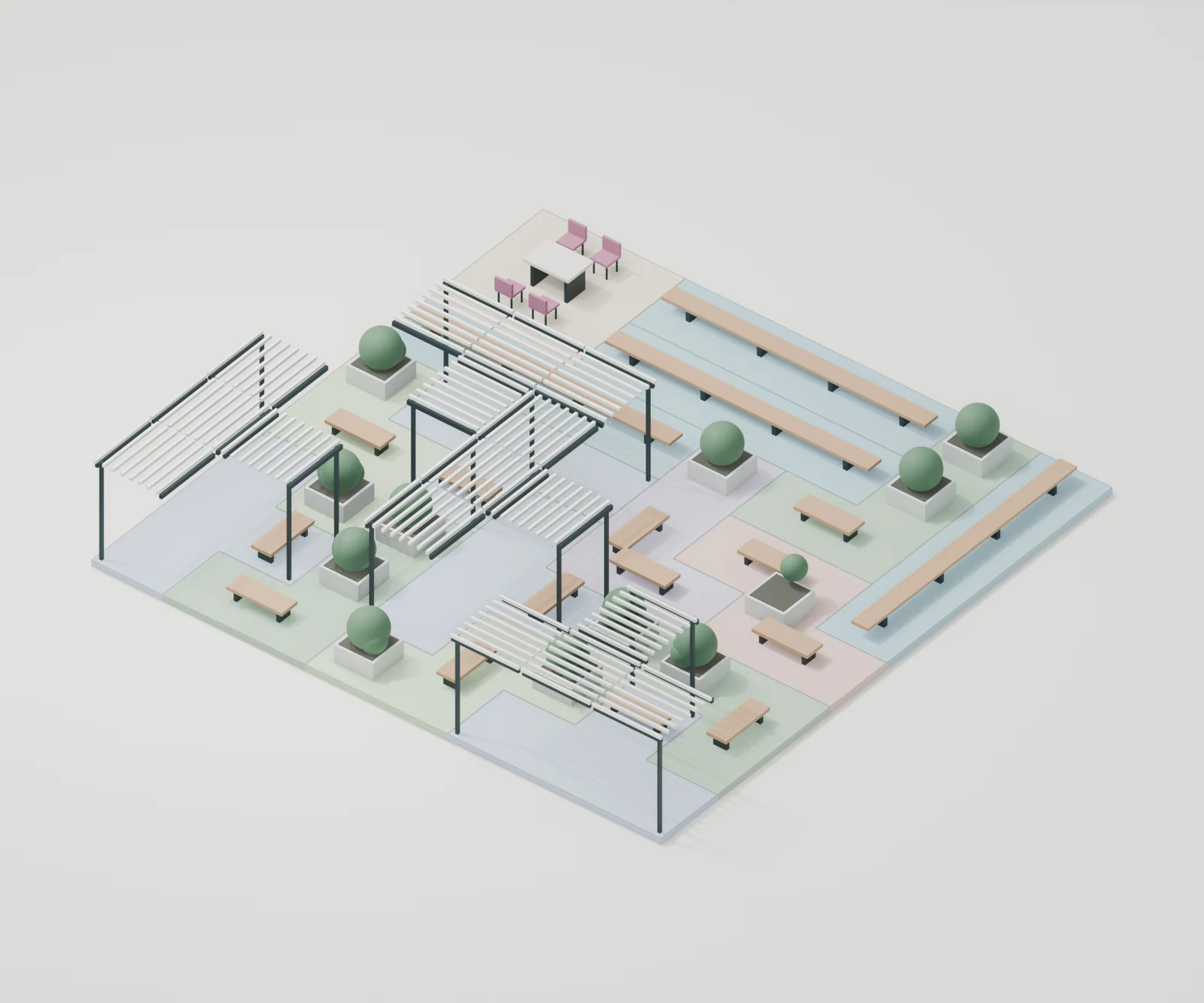
How can movable pieces fill a terrace without fixing it to a single layout?
Courtyard Kit combines seating, planting, tables and pergolas into whole pieces that can move and rotate. The current Freeform study uses seven shapes, each covering four cells of a two-metre grid. Each cell begins with the full set of parts, so seating and planting can appear throughout the terrace.
Paired connectors keep each four-cell shape intact. Finished outer edges can meet the terrace boundary. Monoceros fills the area; the designers create the parts, revise the brief and evaluate the resulting space.
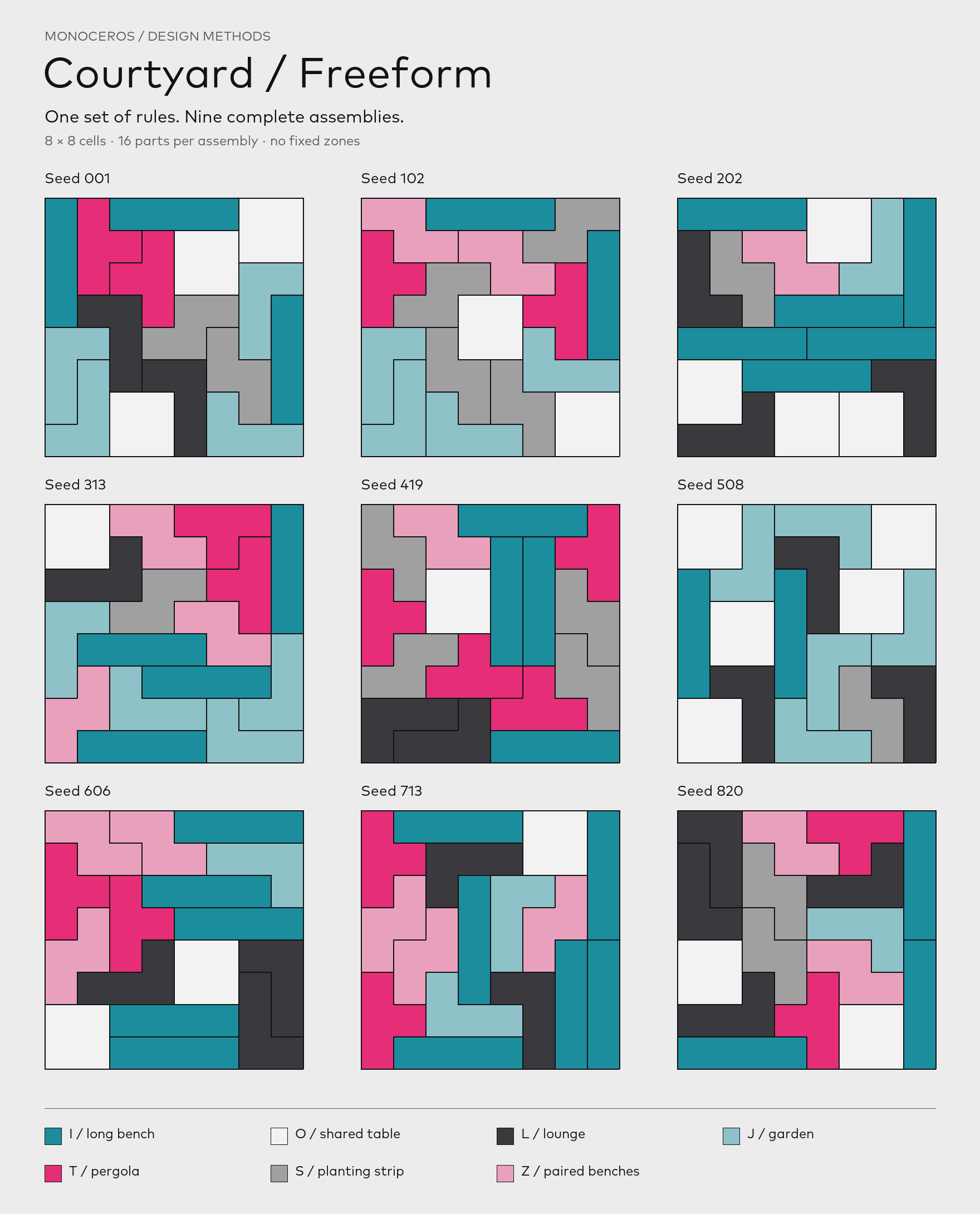
The documented default fills an 8 × 8-cell area with 16 whole pieces. Tests using 25 seeds produced 25 distinct layouts, with checks for complete coverage, intact pieces, boundary rules and repeatability. These findings apply to the tested version and scope of the study.
The connection rules do not establish circulation, accessibility or structural performance; these need further assessment. The pergolas and the relationship between each shape and its function also remain in development.
Design and critique: Ján Pernecký and Hugo Fekar. The Monoceros definition and rendering were developed with AI-assisted scripts. Images show the generated geometry.
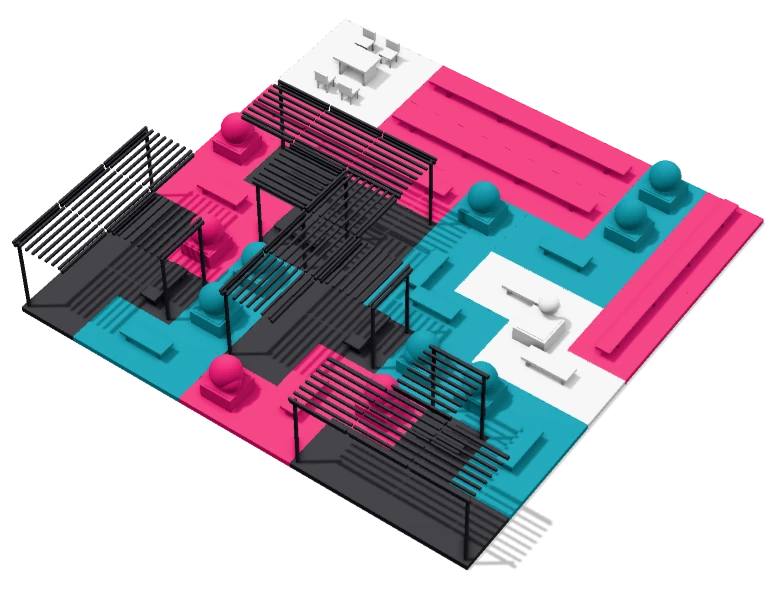
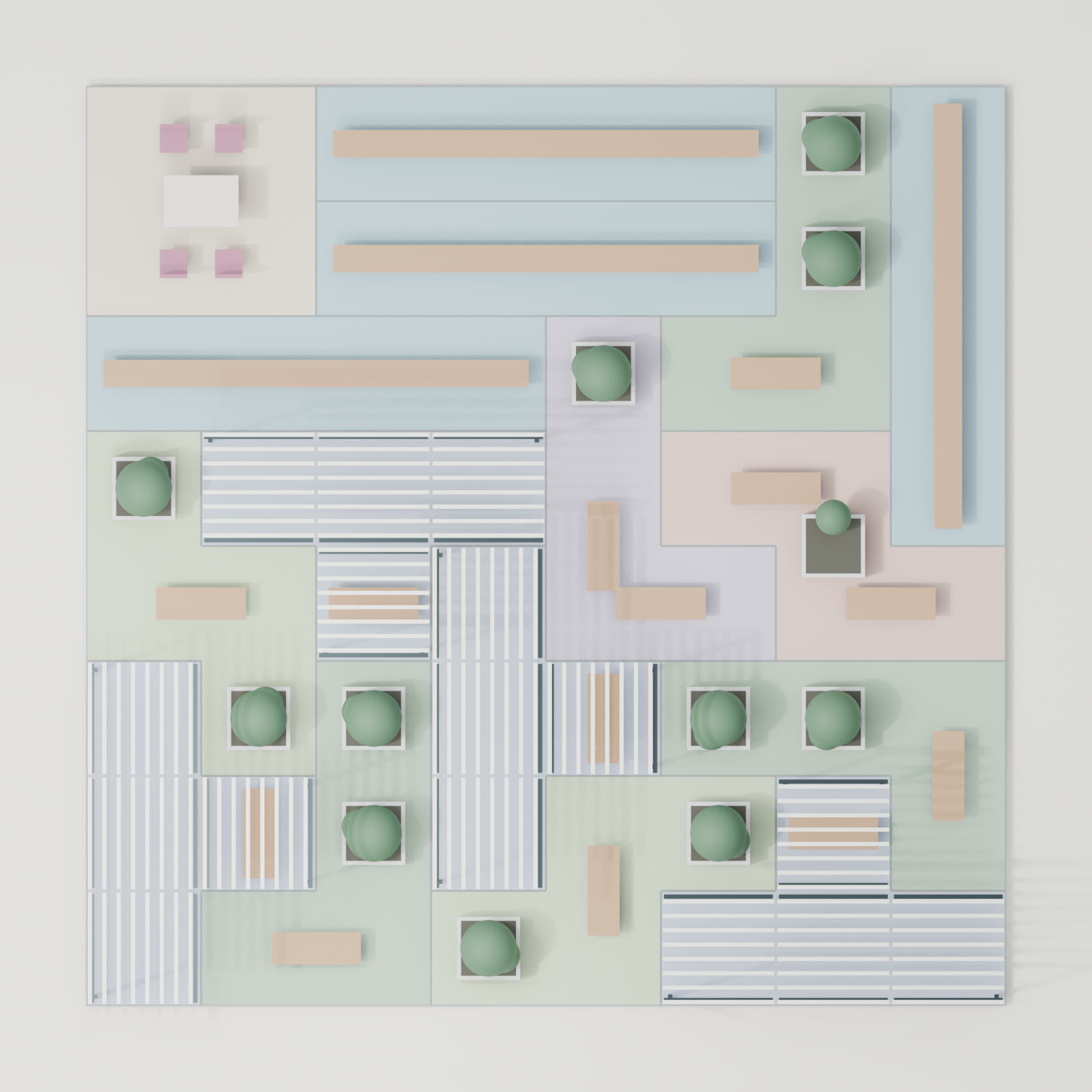
The plan shows the terrace from above. Seating, tables, planting and pergolas belong to whole movable shapes. In the variation diagrams, colours identify shapes, not functions. Paired connectors keep each four-cell shape intact.
The plan and variations show how the parts are arranged under the connection rules. They do not confirm circulation, accessibility, structural or fabrication compliance.
We can identify where a custom tool could help and discuss what its development would involve.
Modular seating developed with Monoceros and custom scripts.
Ján Pernecký & Hugo Fekar
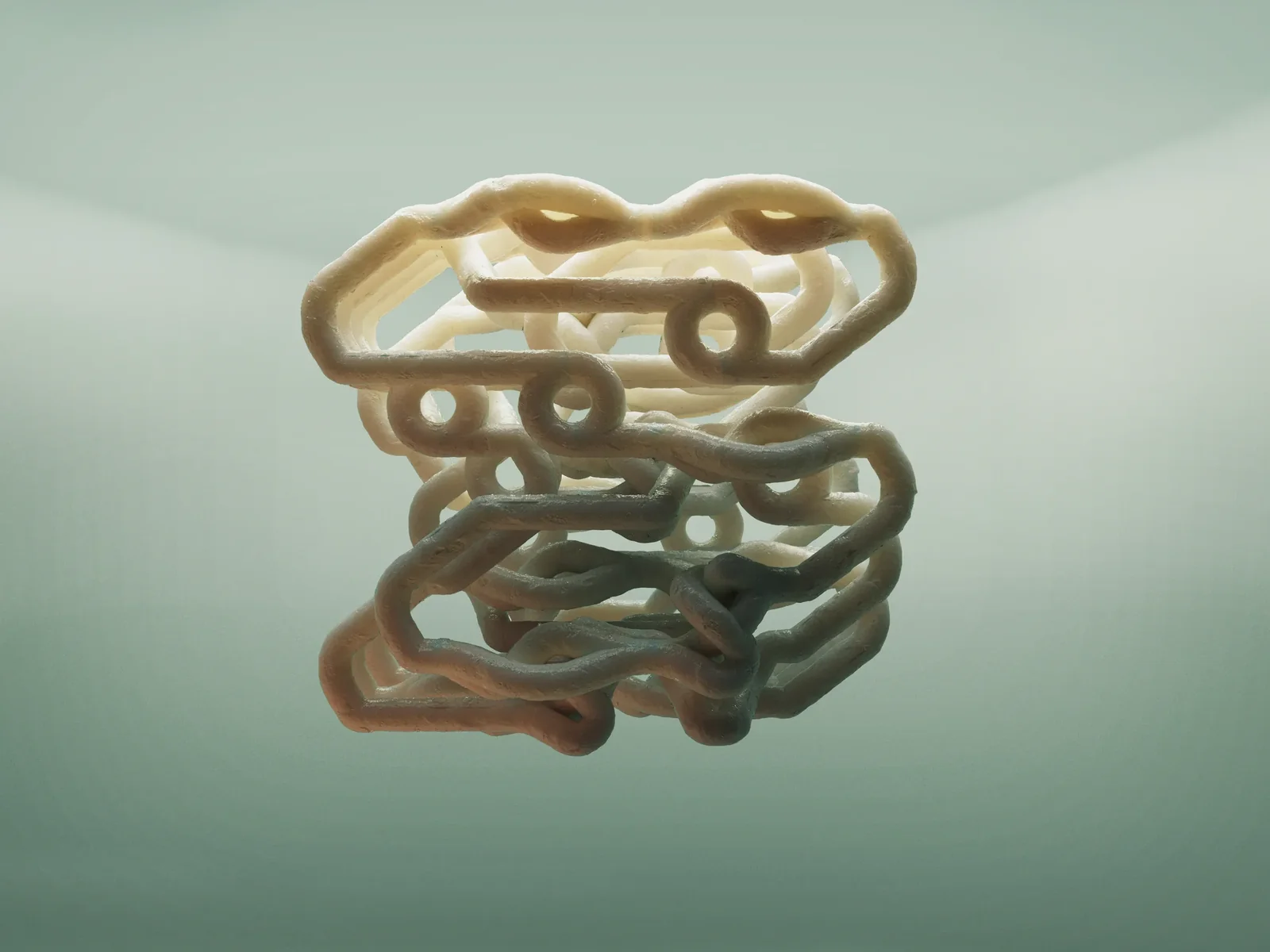
A sculptural study assembled from curved parts with Monoceros.
Ján Pernecký, Erika Hrivíková & Tomáš Tholt · Subdigital
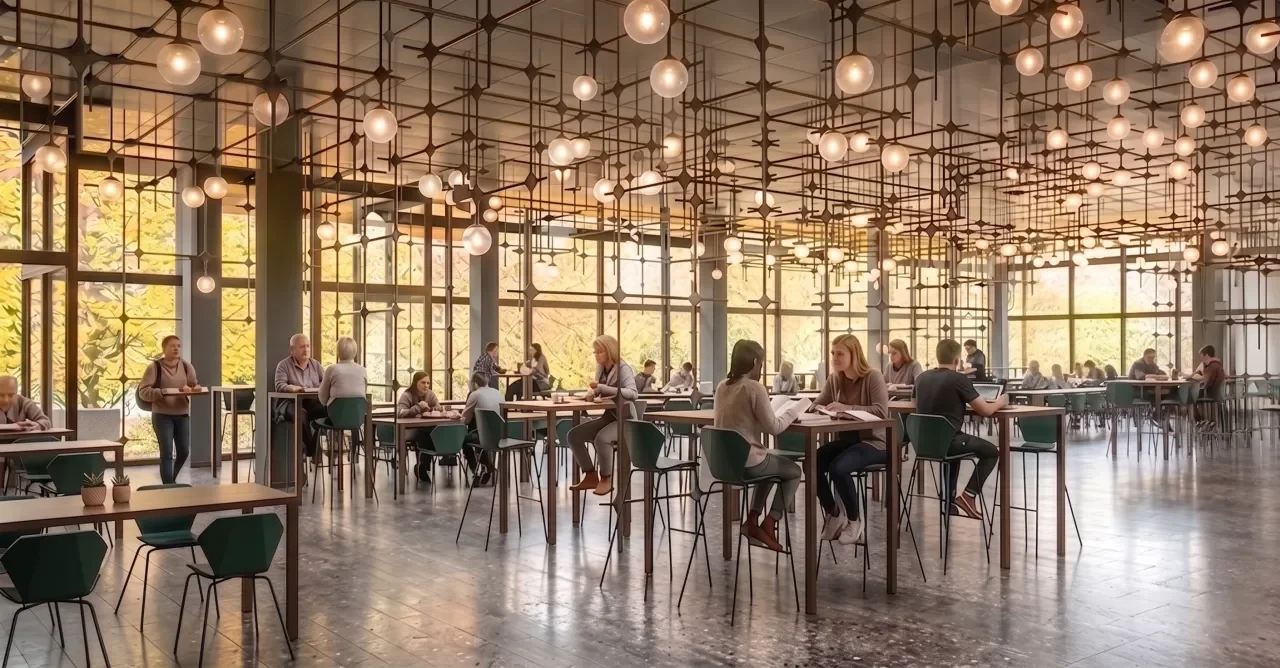
A canteen study that starts with an existing ceiling lamp and tests spatial arrangements in virtual reality.
Konrad Zaremba, Nils Abel & Tomáš Müller · Bauhaus-Universität Weimar