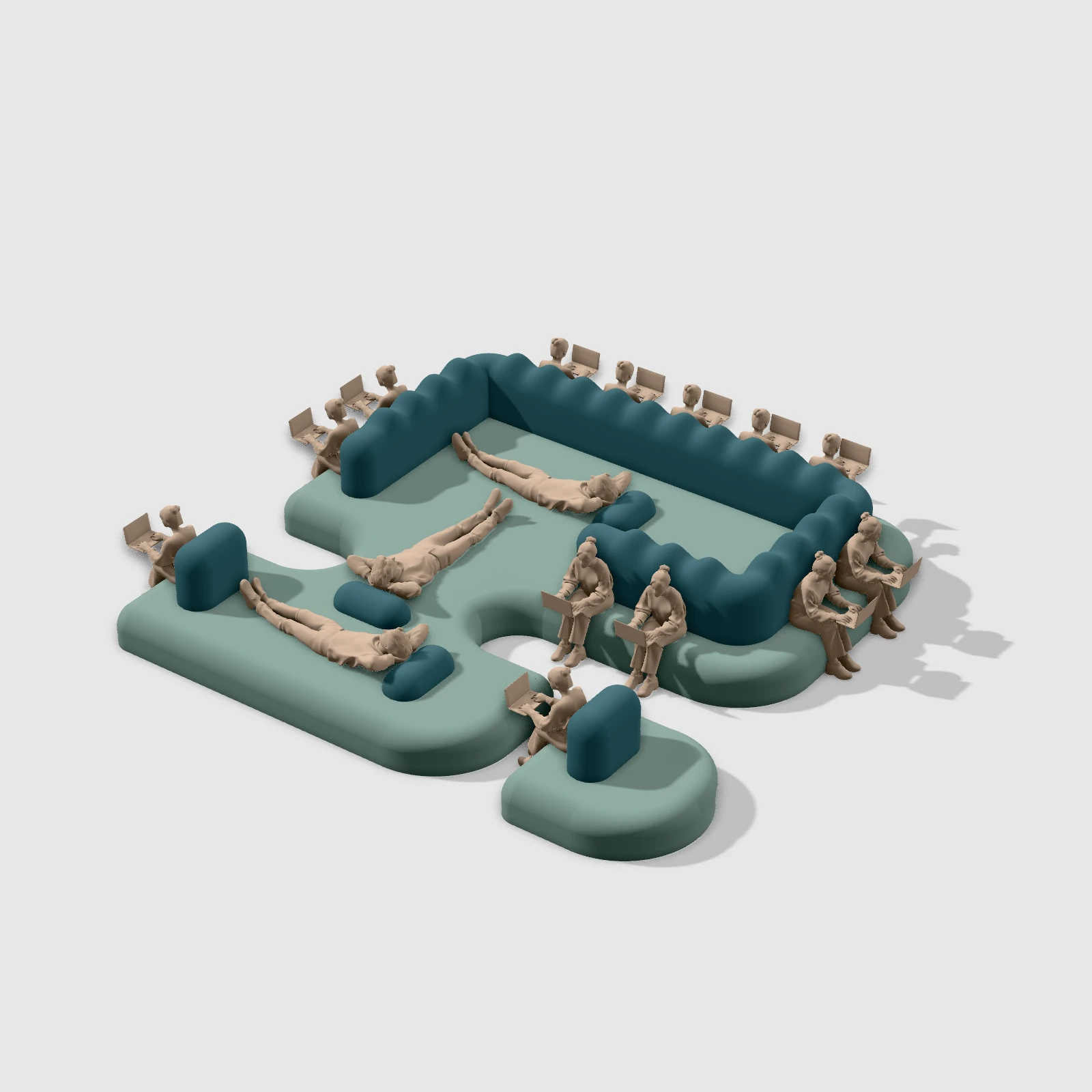
Sitting Islands
A seating landscape made with a hybrid of Monoceros, custom code and design decisions.
Ján Pernecký & Hugo Fekar
Monoceros design study · 2026
Terrace layouts generated from seven movable shapes.
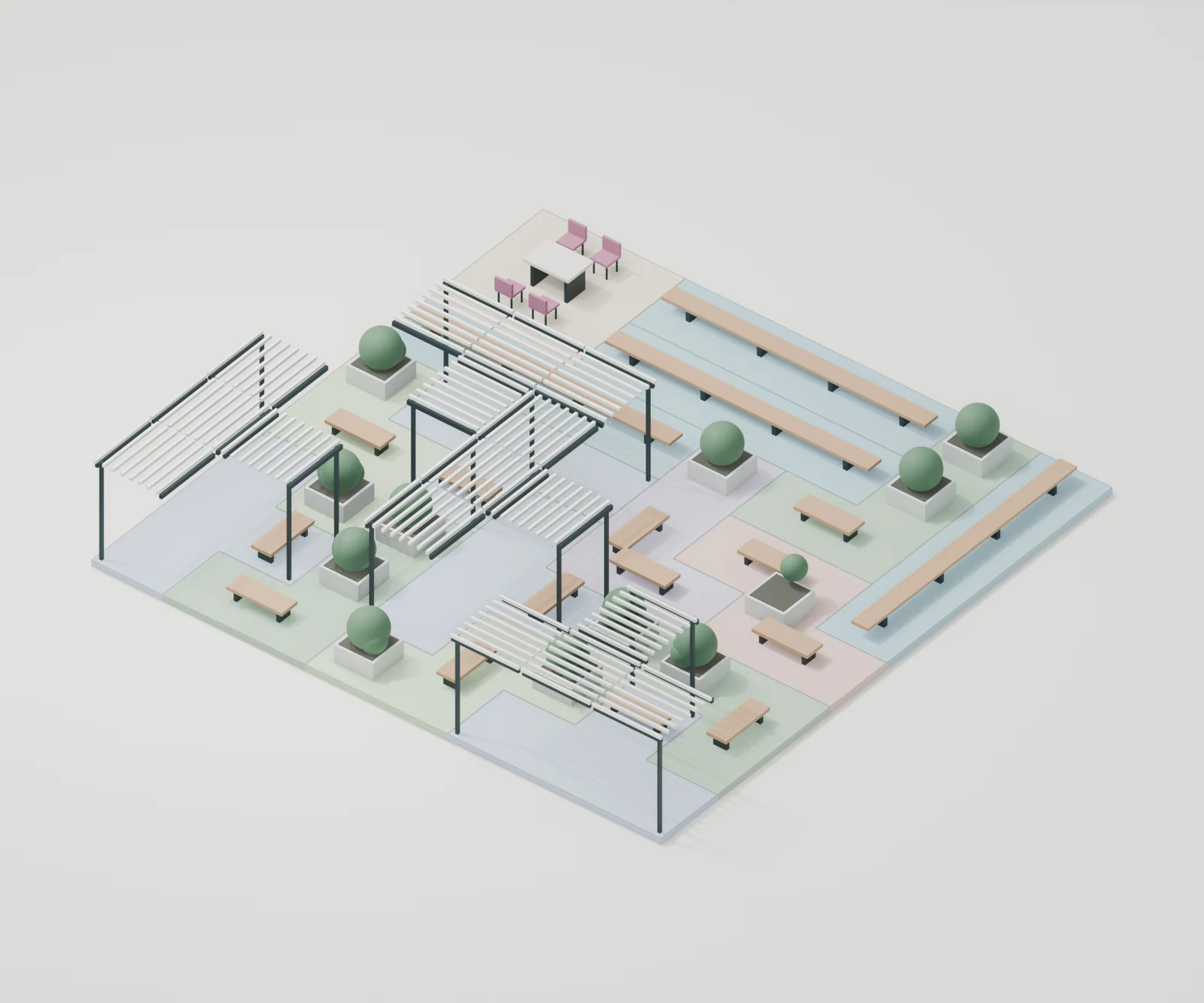
How can a kit of complete, movable pieces fill a terrace without becoming a fixed pattern?
Courtyard Kit explores seating, planting, tables, and pergolas as whole pieces that can move and rotate. The current Freeform study uses seven four-cell shapes on a two-metre grid. Each cell starts with the full set of parts, allowing seating and planting to appear throughout the layout.
Unique paired connectors keep each four-cell shape intact. Finished outer edges can meet the boundary. Monoceros solves the whole area, while the designers author the parts, revise the brief, and judge the resulting space.
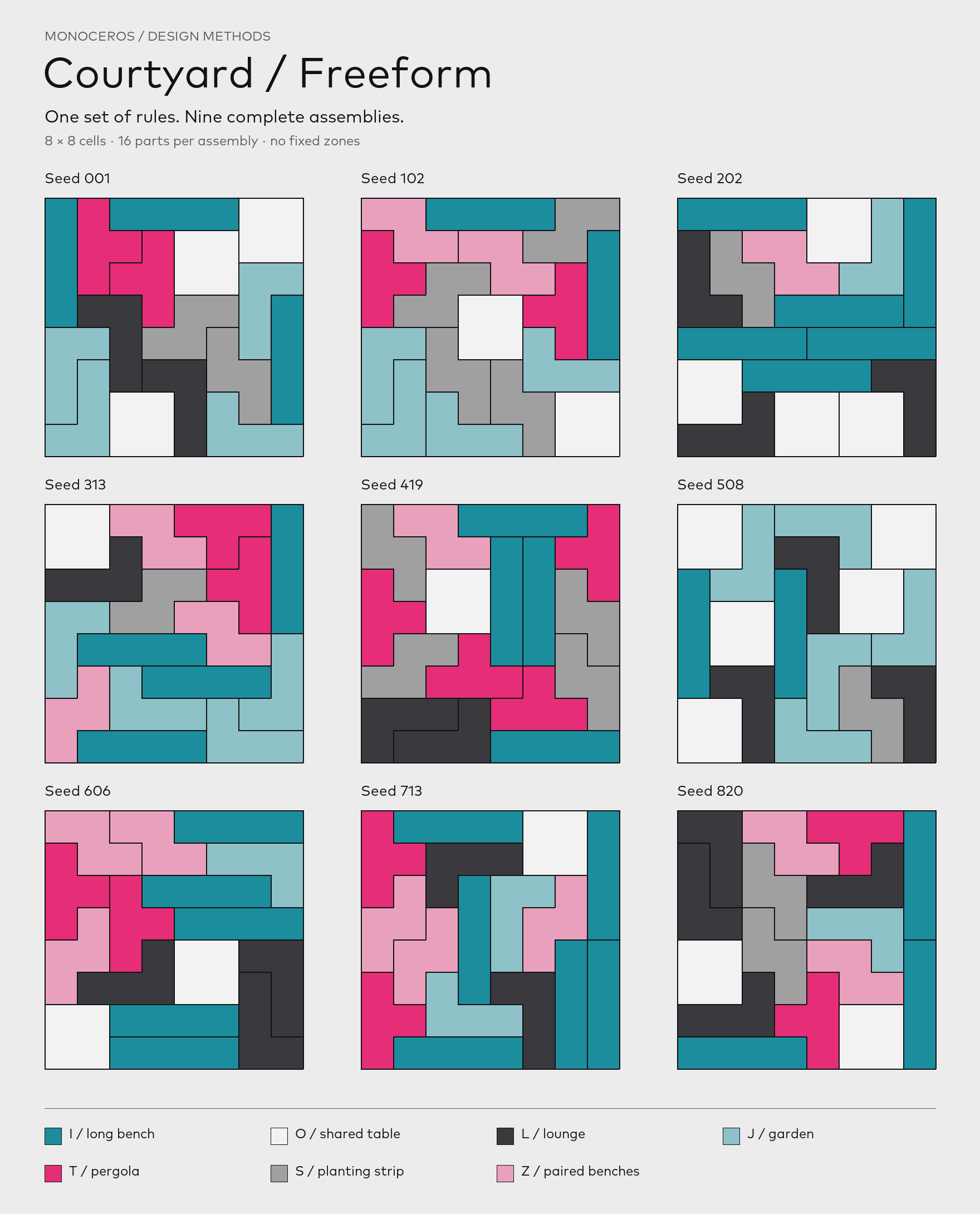
The documented default fills an 8 × 8-cell area with 16 complete pieces. Validation recorded 25 distinct layouts from 25 tested seeds, with checks for full fill, intact pieces, boundary rules, and repeatability. These observations describe this study and its tested range.
Circulation, accessibility, and structural design need further review beyond the encoded connection rules. The pergolas and the relationship between each shape and its function remain subjects of design development.
Design development and critique: Ján Pernecký & Hugo Fekar. Native definition and rendering developed with AI-assisted scripts. Images render the generated geometry.
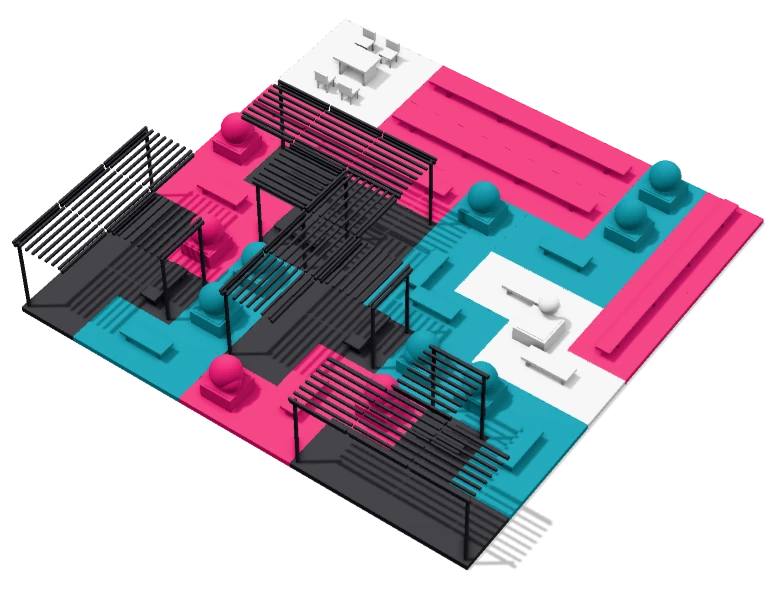
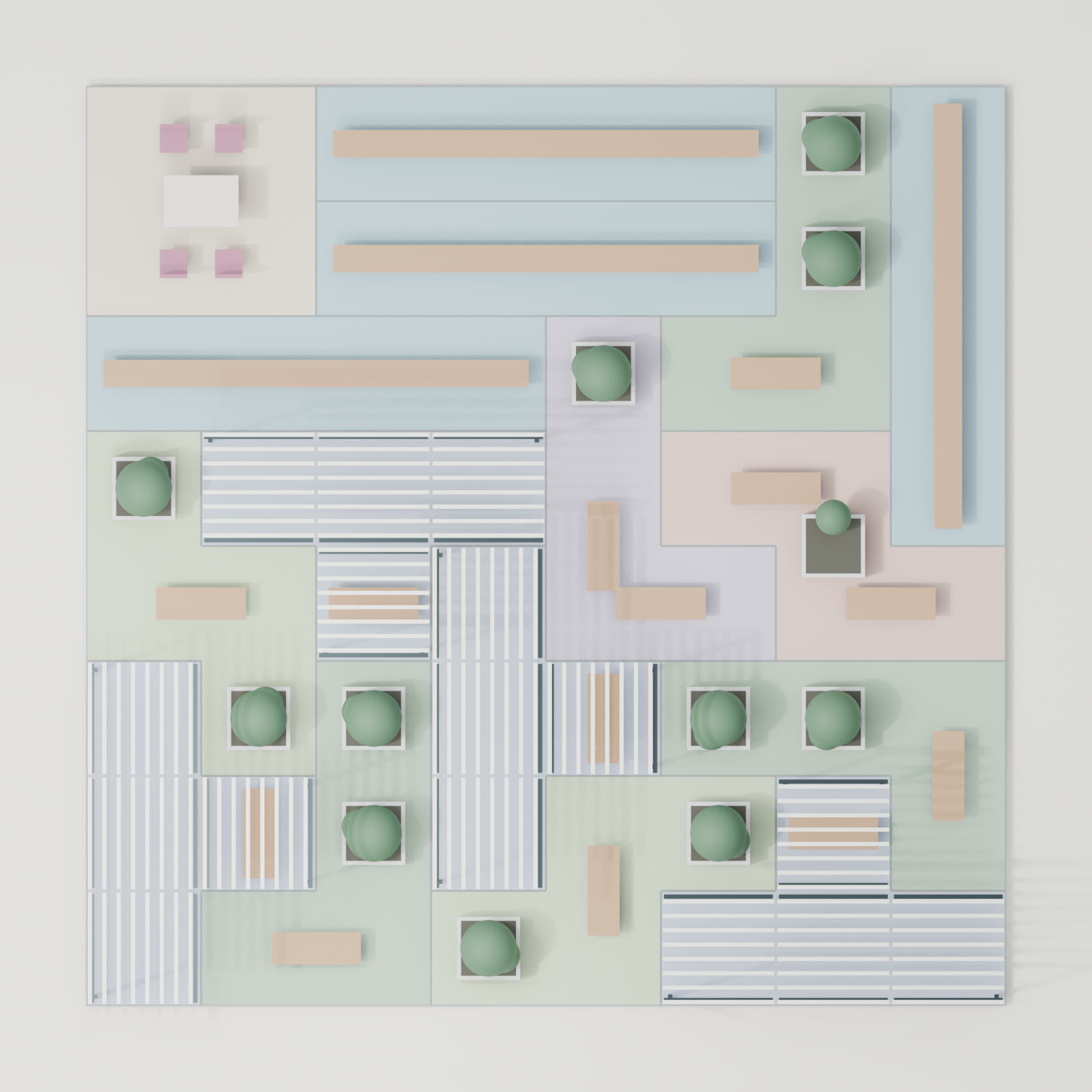
The plan shows the assembled terrace from above. Seating, tables, planting and pergolas belong to whole movable shapes. In the variant diagrams, colours identify shapes rather than uses. Each four-cell shape stays intact through paired connectors.
The plan and variants illustrate the encoded arrangement. They do not establish circulation, accessibility, structural or fabrication compliance.
We can assess where a custom tool would help with your project and discuss the work involved.
A seating landscape made with a hybrid of Monoceros, custom code and design decisions.
Ján Pernecký & Hugo Fekar
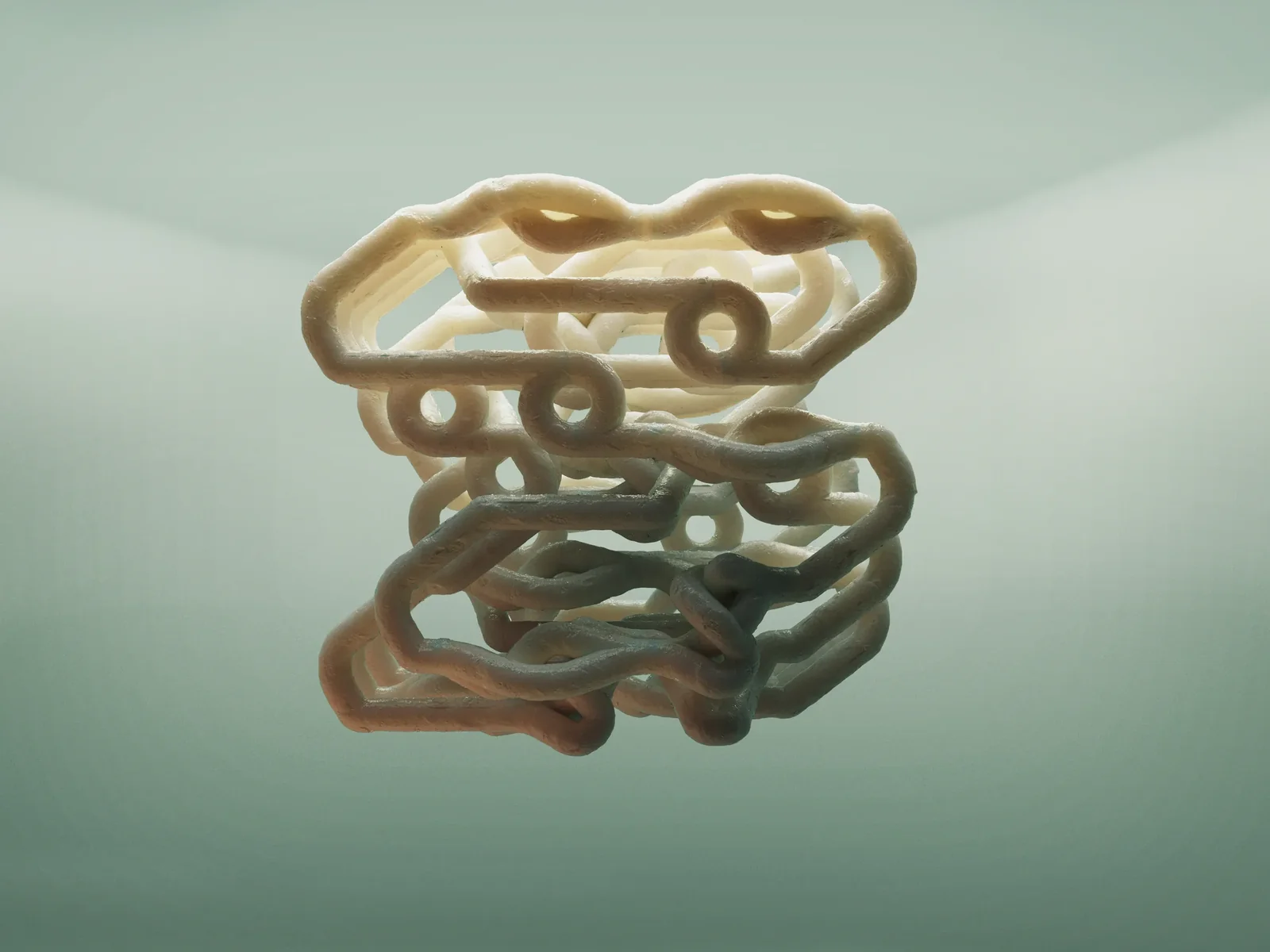
A sculptural study assembled from curved parts with Monoceros.
Ján Pernecký, Erika Hrivíková & Tomáš Tholt · Subdigital
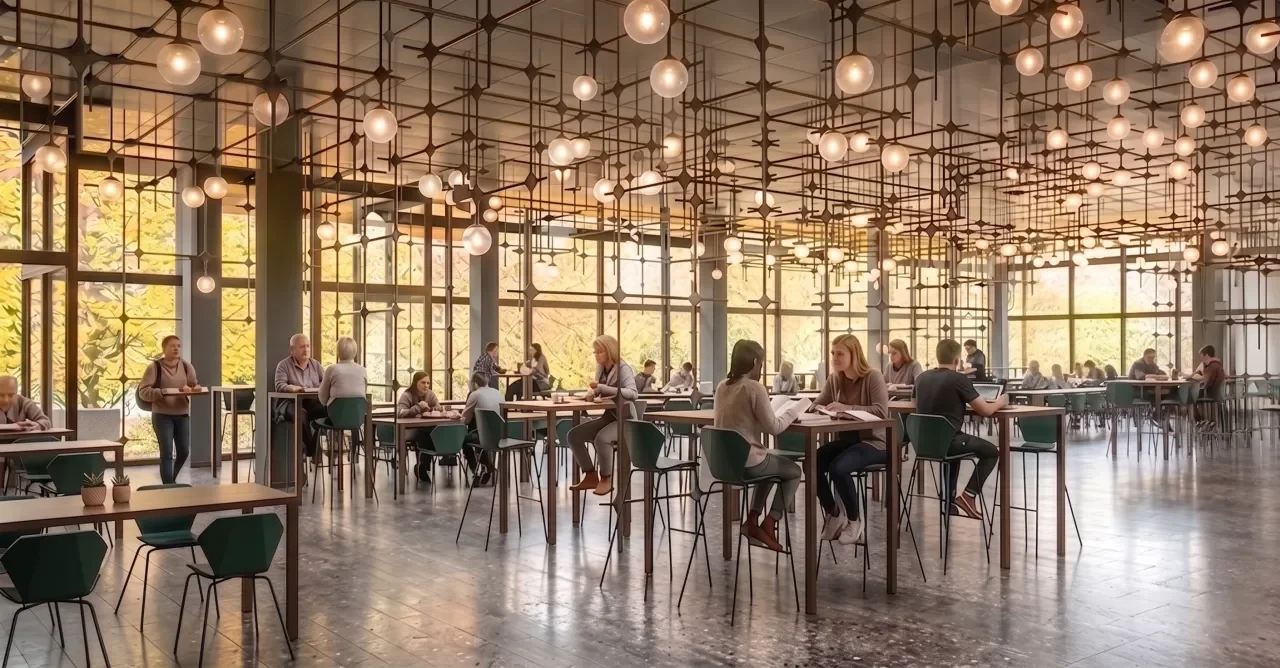
A canteen study that starts with an existing ceiling lamp and tests spatial arrangements in virtual reality.
Konrad Zaremba, Nils Abel & Tomáš Müller · Bauhaus-Universität Weimar